
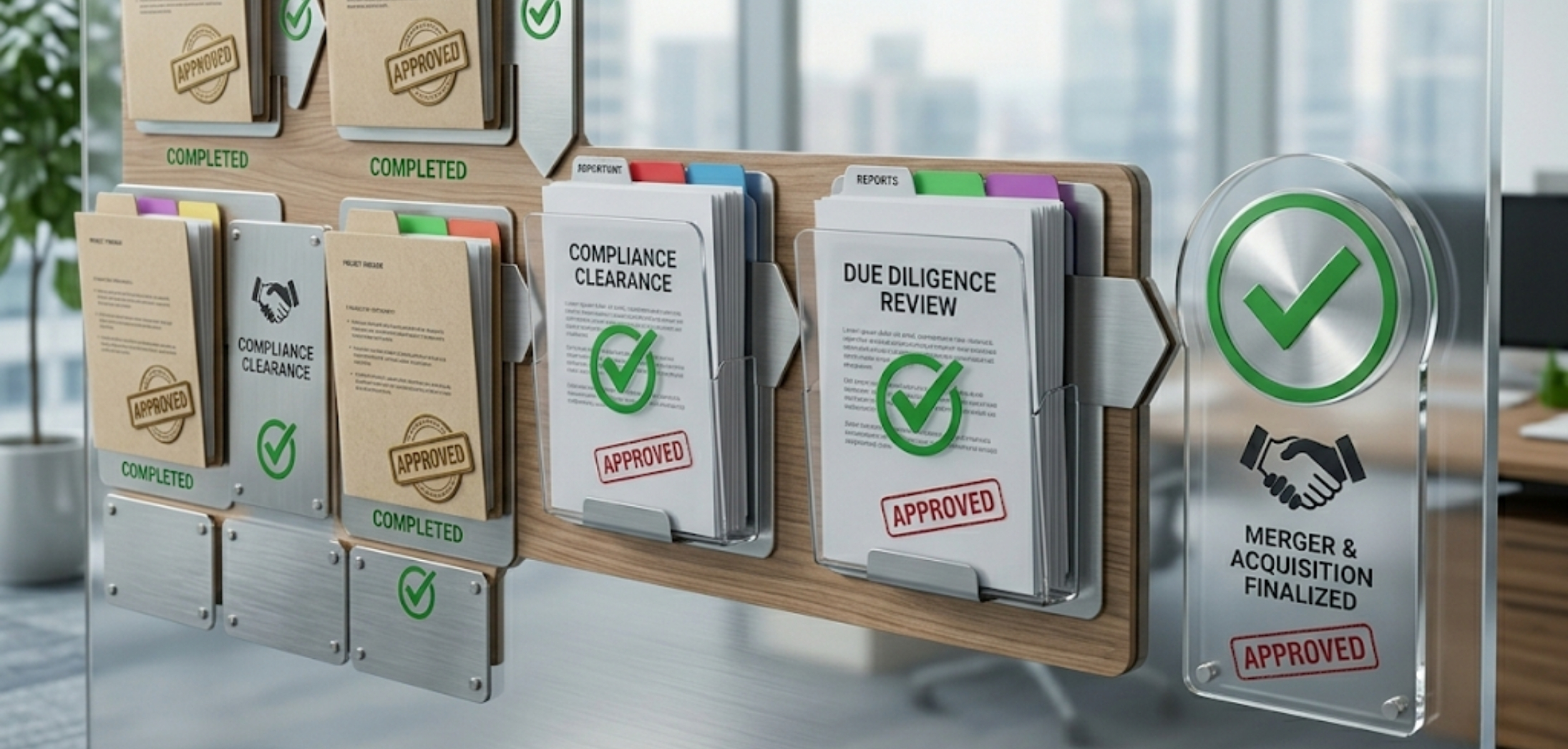
M&A Process in India: 5 Legal Stages Explained Simply
Every merger or acquisition in India whether a startup acqui-hire or a cross-border buyout moves through the same five legal stages. Knowing them helps you plan timelines, budget costs, and avoid the mistakes that derail deals.
Stage 1: Term Sheet
The deal begins with a term sheet recording the headline terms: structure, valuation, payment mechanics, and exclusivity. Most of it is non-binding, but confidentiality and exclusivity clauses bind from day one. A precise term sheet now prevents painful renegotiation later.
Stage 2: Due Diligence
The buyer’s advisors examine the target’s legal, financial, tax, and compliance health. In India, the usual red flags are unpaid statutory dues (GST, TDS, PF), founder-owned IP never assigned to the company, and past foreign investment received without FEMA reporting. Diligence findings directly shape price and indemnities.
Stage 3: Definitive Agreements
The transaction is documented in a Share Purchase Agreement or scheme documents covering warranties, indemnities, conditions precedent, and closing mechanics. Negotiations typically concentrate on the indemnity package and whether part of the price sits in escrow.
Stage 4: Regulatory Approvals
Depending on the deal: CCI clearance for large transactions, NCLT sanction for merger schemes, SEBI compliance for listed companies, and RBI/FEMA rules for cross-border legs. Here’s the good news: qualifying group restructurings can now use the fast-track merger route under Section 233, approved by the Regional Director instead of the NCLT cutting timelines from 8–14 months to roughly 3–5. The 2025 rule expansion brought far more companies, including fellow subsidiaries and certain inbound cross-border mergers, within its scope.
Stage 5: Closing and Integration
Funds flow, shares transfer, boards are reconstituted, and filings follow (including FC-TRS within 60 days for cross-border transfers). The best deals treat integration compliance calendars, contracts, people as part of the transaction, not an afterthought.
The Takeaway
A private acquisition can close in 2–4 months; a tribunal-approved merger takes over a year. Structure and early legal involvement decide which side of that range you land on.
Planning a deal in 2026? Legacy Partners advises on M&A structuring, due diligence, and approvals across India and the Gulf. Book a confidential consultation →
© 2026 Business Consultant & Law Firm - Legacy Partners. All Rights Reserved.
Designed by Nuewelle Digital Solutions LLP

Legacy Partners
We typically reply in a few minutes